

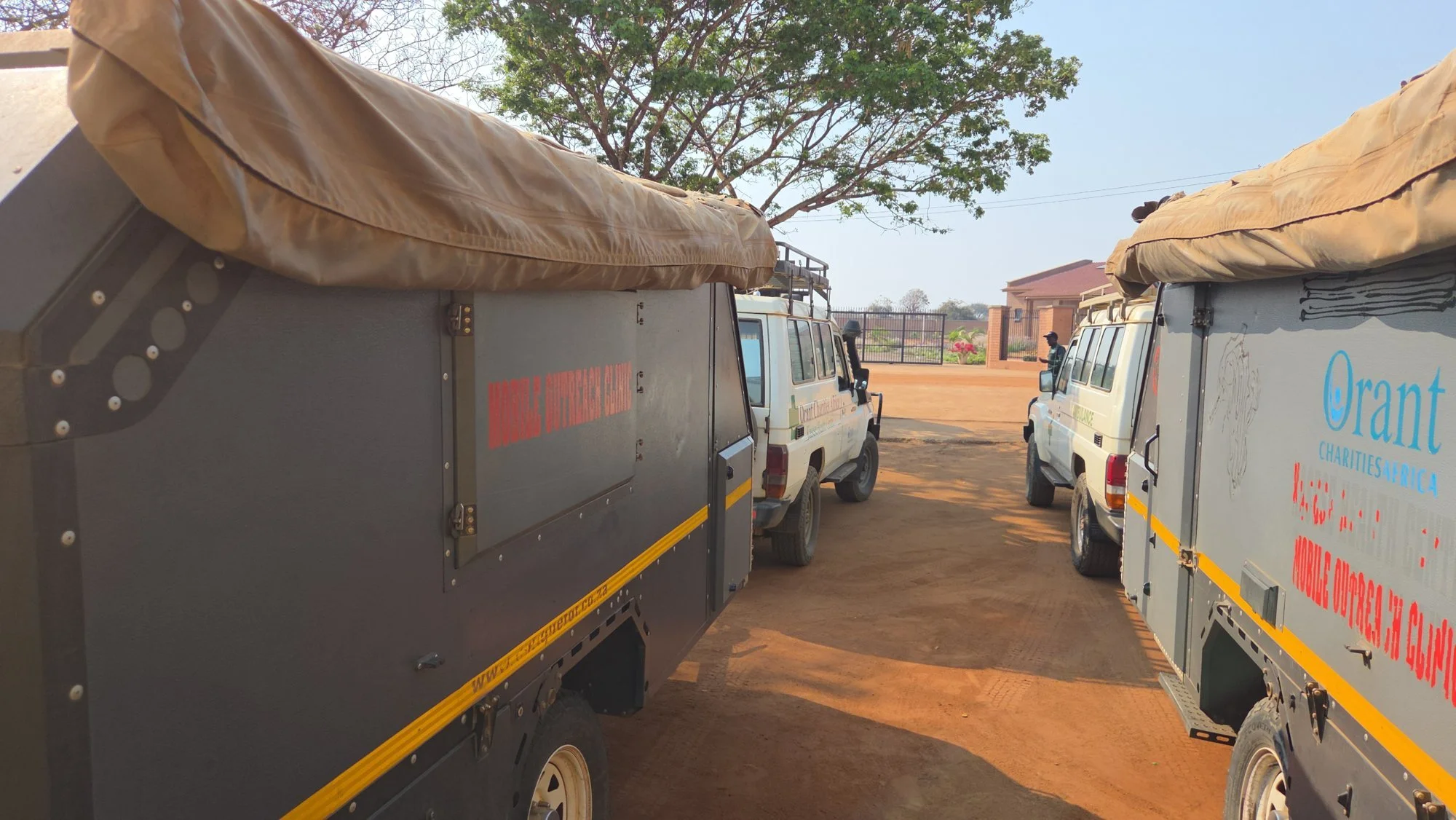
Orant Charities Africa’s mobile outreach clinic vehicles at the health centre in September. Both run on diesel.
For most of October, the wait at a Malawian petrol station has been measured in days. Motorists in Blantyre slept in their cars overnight waiting for deliveries. Some truck drivers spent up to a week in fuel lines. By mid-October, diesel had been scarce across the country for three weeks.
In a country that moves almost everything by road, the shortage reaches well past the gas station.
No refinery, no coastline
Malawi has no oil wells, no refinery and no seaport. Every liter of petrol and diesel arrives by tanker truck from the ports of Dar es Salaam in Tanzania or Beira in Mozambique. The country uses about a million liters of each fuel every day.
That fuel is bought in U.S. dollars, and Malawi is short of them.
“Malawi earns too little foreign exchange relative to its import needs,” Brendon Verster, a senior economist at Oxford Economics Africa, told Forbes Africa.
Much of the country’s foreign currency comes from tobacco, its largest export and roughly 15 percent of its economy. This year’s crop earned $282.5 million in the first 19 weeks of sales, down from $500.4 million over the same weeks in 2025. The average price fell from $2.54 a kilogram to $1.98.
In July, the Reserve Bank of Malawi reported foreign reserves of $600.6 million, enough to cover about 2.4 months of imports. The recommended minimum is three.
The cost of getting to market
Most rural families in Malawi don’t own a car or truck. Farmers and traders move their goods on minibuses, hired pickups and trucks, nearly all of which run on diesel. When fuel runs short, fares go up.
In early October, the minibus fare from Lilongwe to Mponela, a trading town north of the capital, rose from K6,000 to K11,000, News Diggers reported. Inside Lilongwe, the ride from Area 25 to Old Town went from K4,000 to K6,000. Some commuters started walking or hitching rides instead.
“The commuter absorbs the shock,” Coaxley Kamange, general secretary of the Minibus Owners Association of Malawi, told The Nation earlier this year, after an earlier round of shortages more than doubled fares on many routes.
For a farmer, the commuter is also the shipper. A doubled fare comes straight out of what a crate of tomatoes or a bag of maize brings home. Small traders who restock every day face the same math, and shops pass the extra cost on to their customers.
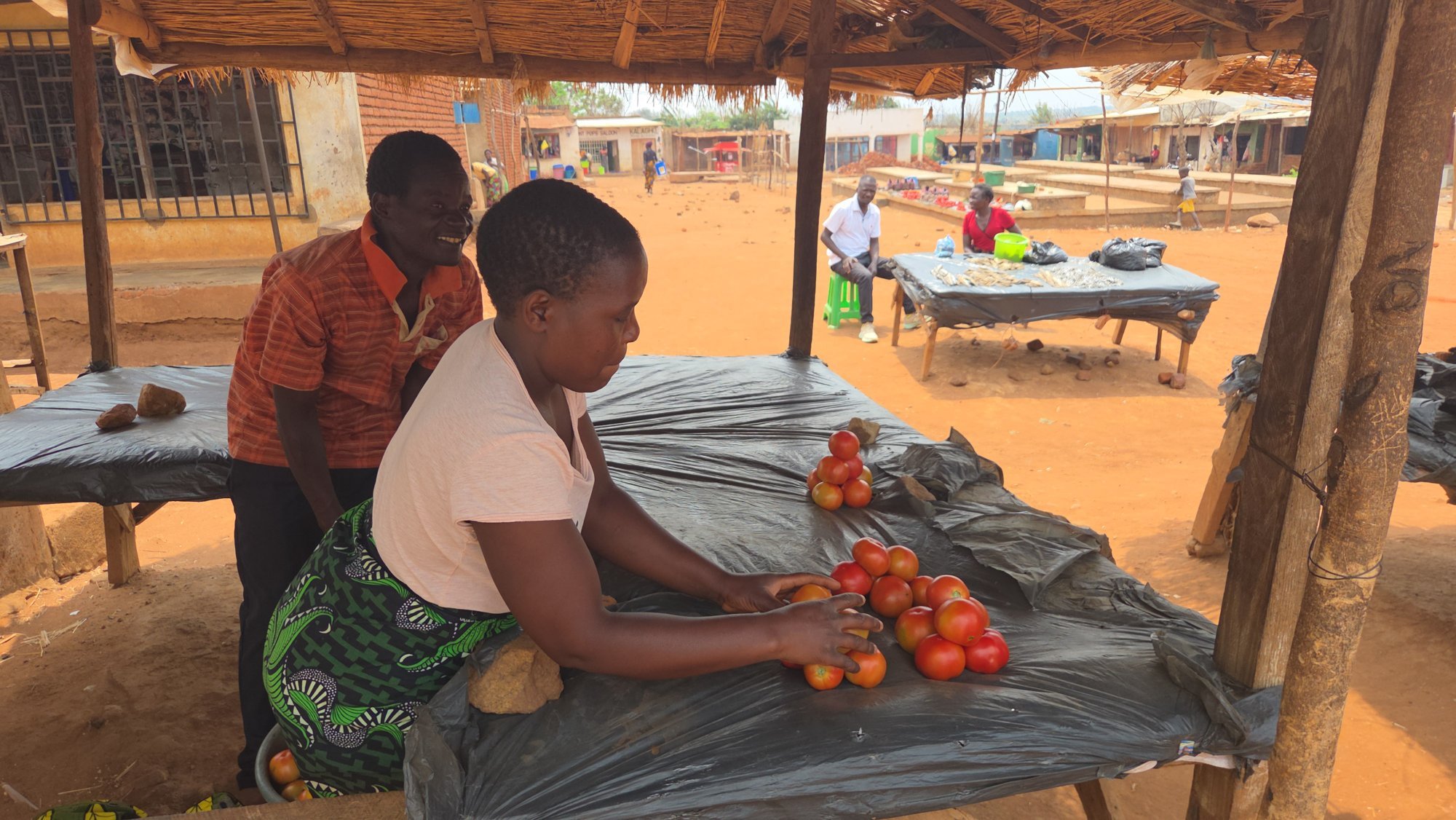
Tomatoes for sale at a market in central Malawi in September. Higher transport costs come out of what sellers take home.
Not the first squeeze this year
Fuel has been a strain on Malawians since January, when regulated petrol and diesel prices jumped more than 41 percent overnight. By February, the minibus fare between Blantyre and Lilongwe had risen from K35,000 to K75,000. In April, black-market diesel was selling for K25,000 a liter.
The shortages have reached the power grid, too. Earlier this year, the national power company’s diesel backup plants at Kanengo and Luwinga struggled to run, and some areas saw blackouts of up to eight hours.
When the mobile pharmacy can’t move
The shortage has reached Orant’s own work.
Orant Charities Africa runs a health centre in central Malawi, but many of the families it serves live too far away to walk there. For them, care comes by road. A mobile pharmacy and clinic drives out to villages, sets up, registers patients and hands out medicine on the spot.
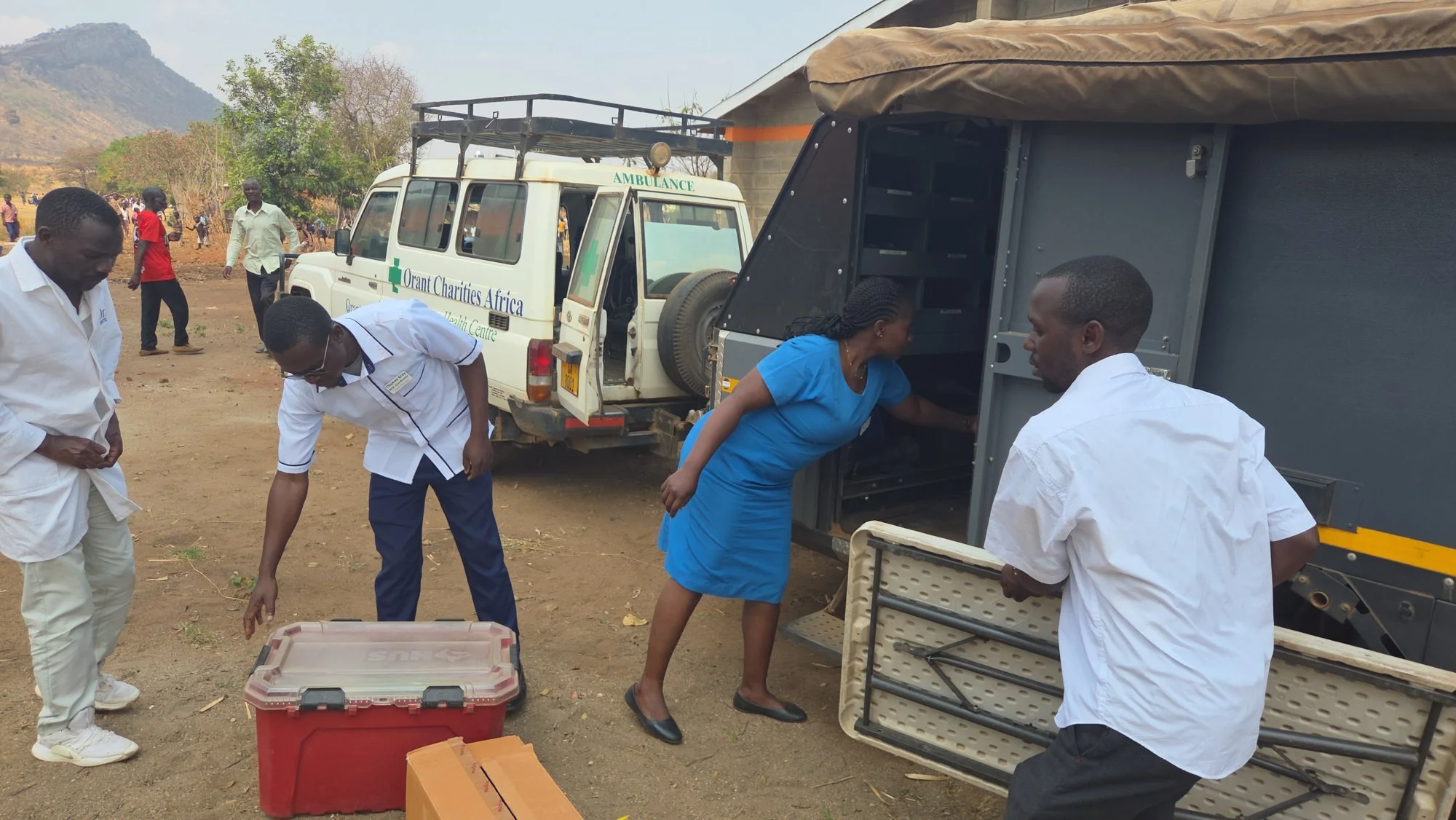
Orant Charities Africa staff set up the mobile pharmacy at an outreach clinic in September.
That vehicle runs on diesel. With no reliable fuel, the outreach trips have been disrupted, and the people at the end of those routes are the ones who go without. For a mother waiting to have her child tested for malaria, a missed visit means a long walk to the health centre or no care at all.
What comes next
About 287 fuel tankers were due in Malawi the week of Oct. 19, according to the Transporters Association of Malawi. Spokesperson Frank Banda said the association’s first 100 trucks had been sent to Dar es Salaam more than two weeks earlier, and “nothing was happening.” The association appealed to President Peter Mutharika to break a weeks-long deadlock at the ports, and loading began the next morning.
On Oct. 24, Energy Minister Jean Mathanga said the crisis was nearing its end.
Economists are more cautious. Chris Vandome, a senior research fellow at Chatham House, described Malawi as being in a “long-term economic crisis.” Until the country earns more foreign currency, the tankers will keep arriving late.
Help keep care moving in Malawi: orantcharities.org/support-us
