

Malawi’s Fields Are Growing, And So Are Its Farmers
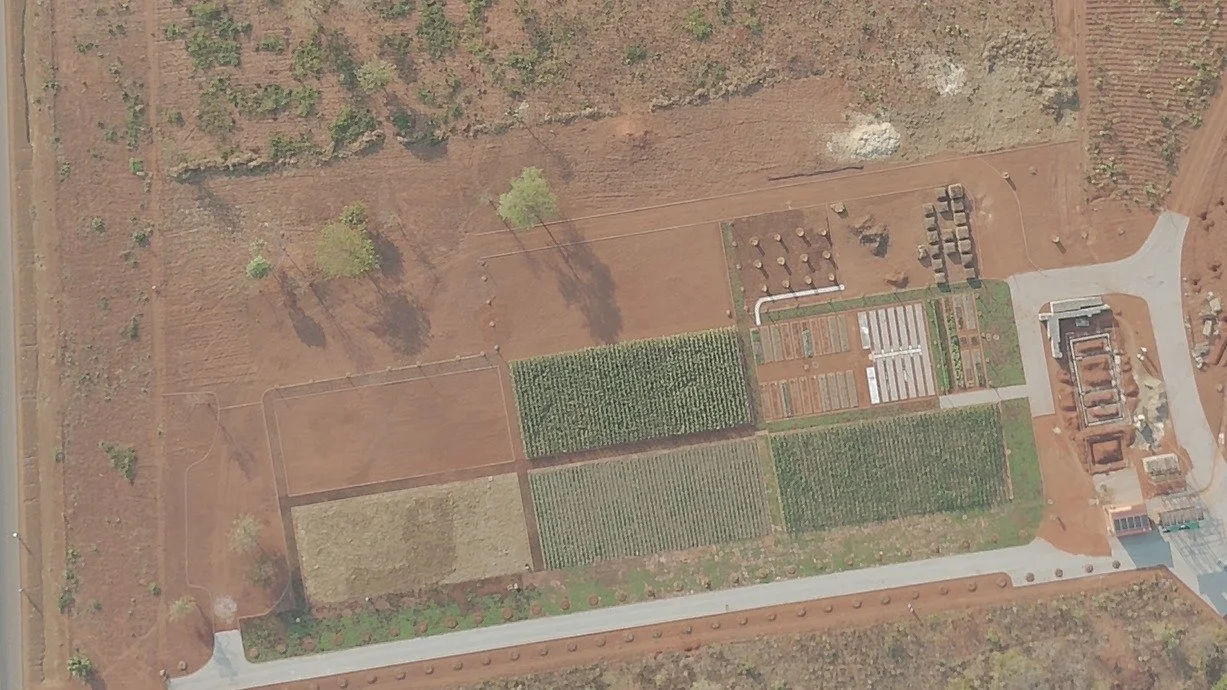
When most people picture Orant Charities’ efforts in Kasese, they think of the health centre, the Golden Centre, or the maternity ward. They don't always picture a farm. But drive down the M1 and turn onto the avocado-lined road, and you'll find one of the fastest-changing parts of our campus: rows of maize, a garden of raised beds, a young orchard, and new buildings going up at the end of the road.
It's all set against the red, dry ground of a Malawian September, and it tells a great deal about where our agriculture program is headed.
A garden built to teach
At the centre of the agriculture section is our demonstration garden. These beds are planted with herbs, leafy vegetables and berries, dozens of varieties altogether.
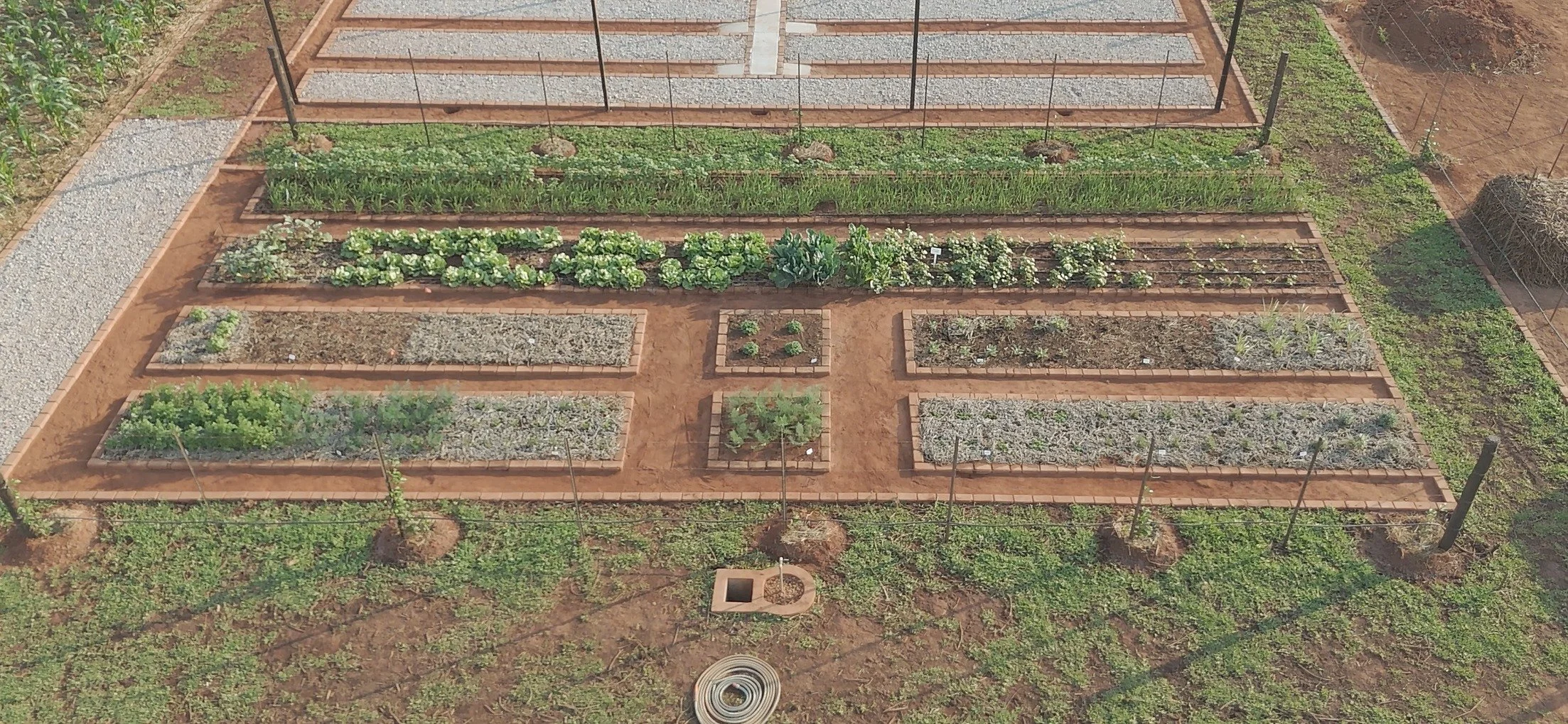
The bed that stops people is the one running right across the middle of the garden: a full row of dryland rice. In Malawi, rice usually means wet, low-lying land. Dryland rice grows on a miniscule amount of moisture in contrast, and at Kasese it is green and healthy in the middle of the dry season.
Planting for the long term
Further along the road, the fields open up into a newly planted macadamia orchard, with trees set out in rows. Macadamia takes years to produce its first crop, but it is a valuable nut with a strong market, and once the trees are established they ask far less of the soil than maize does. It is an investment in the farm's future, and in the kind of income that can keep a program running long after the first harvest.
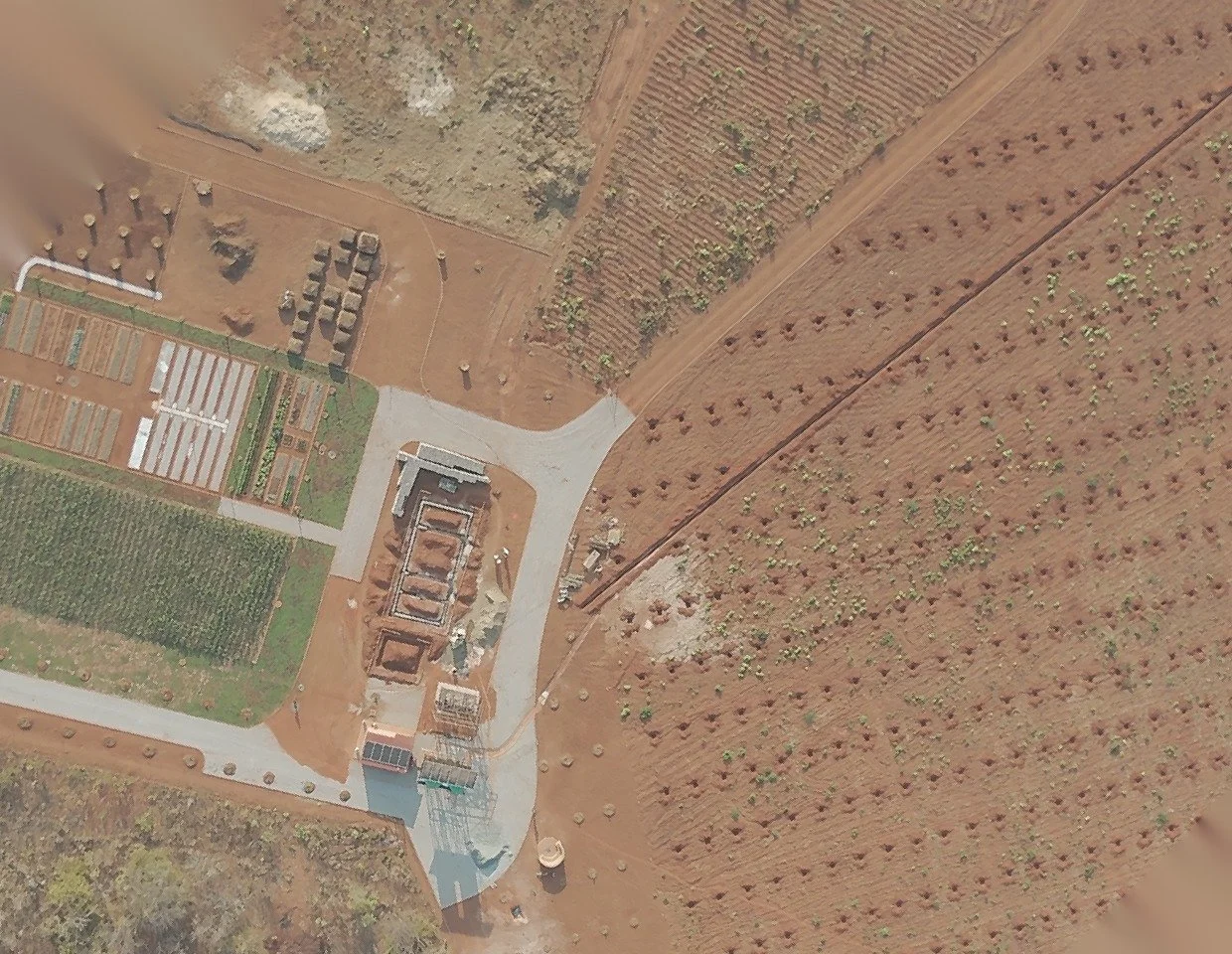
Macadamia trees planted on the right.
Where the farm road turns, two buildings are under construction: a tractor shed with storage, and a cold-storage room for vegetables. That second one matters more than it sounds. Without refrigeration, a farmer has to sell produce days after it is picked, at whatever price the market is paying. Cold storage buys time, and time usually means a better price.
What happens at Kasese doesn't stay at Kasese
The fields are not just for Orant’s own use. Everything growing there is something our team can teach farmers in the surrounding villages to do on their own land: making compost from manure and farm waste, mulching, rotating crops, planting several crops together, and planting trees that improve the soil.
We see early results on farms across the district. General Yosafati and his wife in Nankumba Village used to harvest once a year, and it was never enough to feed their family. After working with one of our agricultural experts, their farm now grows maize, beans, carrots, garlic, ginger, bananas, guavas and papaya, and harvest up to three times a year. Their neighbours now come to them to learn.
And the ten members of the Chivunguti Irrigation Club, who once carried buckets of river water to keep their tomatoes alive, now run a solar-powered pump and manage more than 10,000 tomato plants. "We are running a real business," says Alena Kiliyoni.
At Orant Charities, we have spent 20 years working alongside the communities of Malawi, and we have seen that lasting change rarely comes from one big gift. It comes from knowledge that gets passed from one farmer to the next. The fields at Kasese are where that starts.
If you'd like to help more families in Malawi grow more food on their own land, consider making a donation to Orant today. Every gift goes directly toward the farmers working hardest to build a better future.
