

Built by Hand, One Kitchen at a Time: Fuel-Efficient Cookstoves in Soko Village
In the United States, cooking dinner means turning a knob. In rural Malawi, it usually means walking to find firewood first.
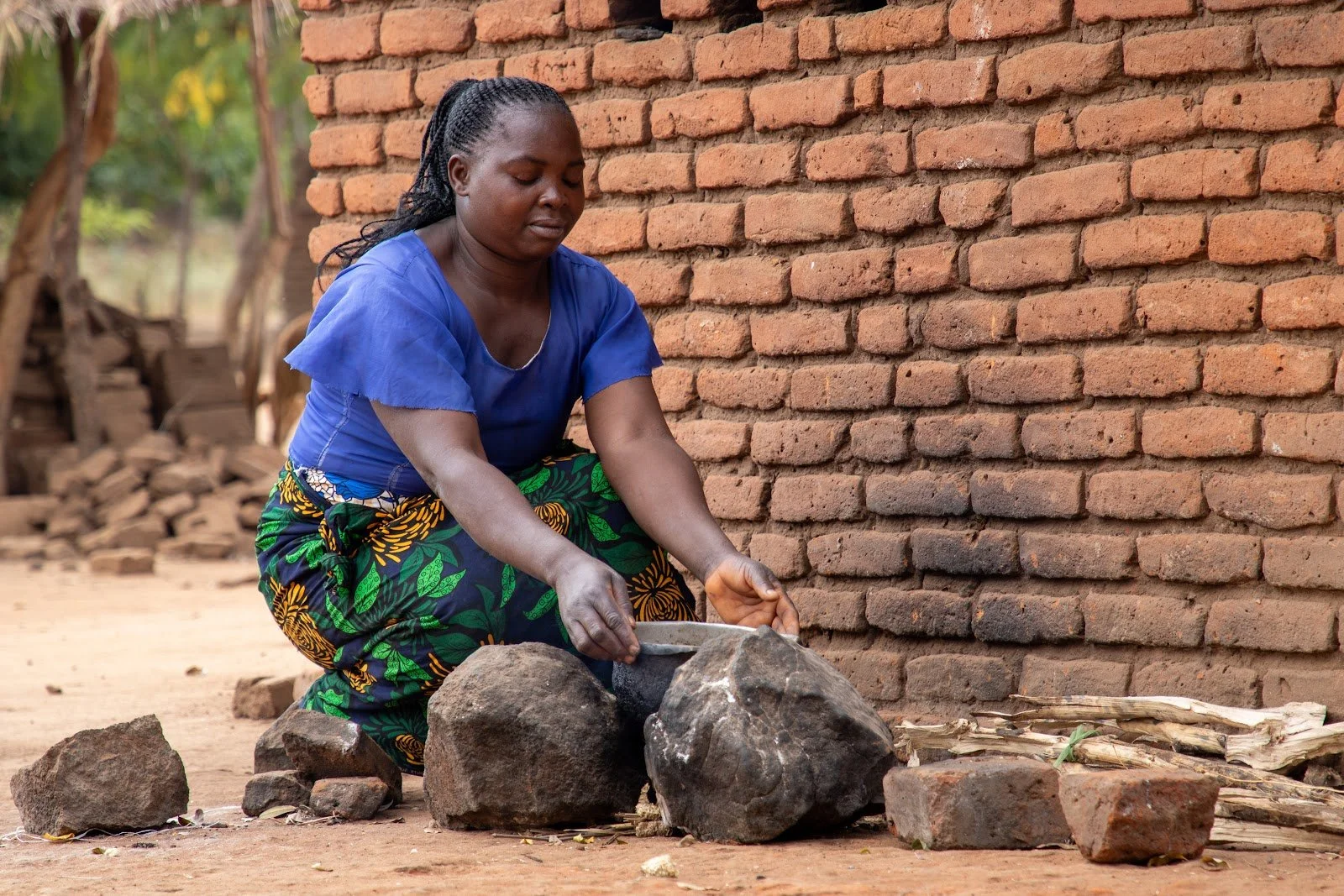
Fewer than 15% of Malawians have access to electricity, and in rural areas that number drops below 5%. Even households connected to the grid deal with frequent, prolonged outages. Gas is available but priced far beyond what most families can afford. As a result, firewood and charcoal remain the fuel for nearly every meal.
That dependence has a cost. As demand for firewood grows, more trees come down. Bare land erodes, soil loses its fertility and communities become more exposed to the effects of a changing climate. The people who cut the trees are not careless; they are cooking.
Soko Village, in Traditional Authority Mulalo, lived with this every day. Women and girls walked long distances into nearby forests and hills to gather firewood. Girls spent hours collecting fuel instead of studying. Women lost time that could have gone to farming, running a business or caring for their families. And the traditional three-stone fire they cooked on was dangerous: pots tipped, children were burned and kitchens filled with smoke that women and young children breathed in for hours.
A stove you can build yourself
Orant Charities Africa's Energy and Environment Program introduced fuel-efficient cookstoves to Soko Village and the surrounding communities. The approach is simple. Instead of handing out manufactured stoves, the program teaches families to build their own out of locally available mud.
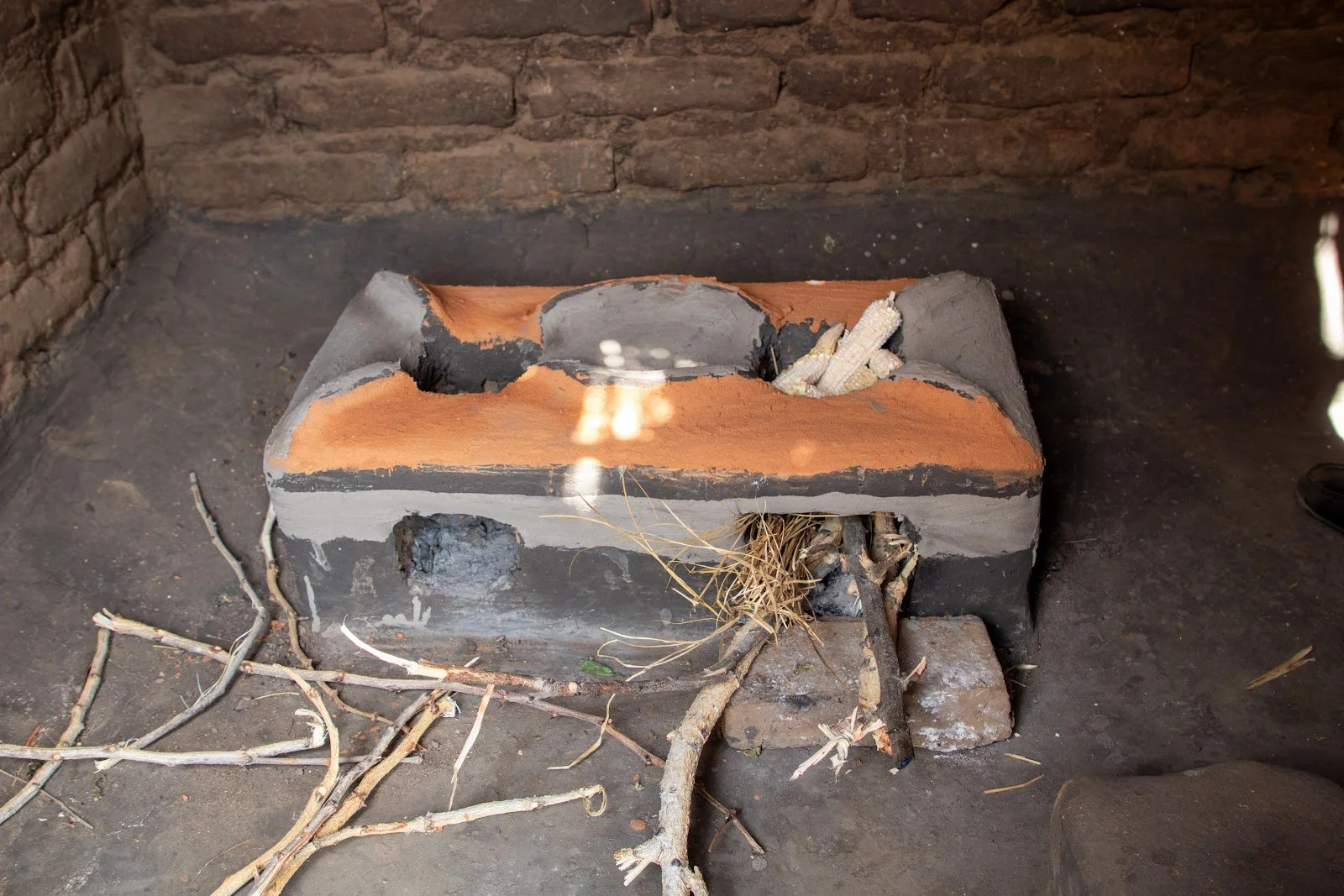
The stoves cost almost nothing to construct. They hold heat longer than an open fire, so meals cook faster with far less fuel. The enclosed design keeps pots stable and produces much less smoke. And because the skill stays in the community, a family does not need Orant to come back when they want a second stove or a neighbor wants one of their own.
Emmanuel Blackson, a resident of Soko Village, heard his neighbors talking about how much firewood they were saving. He built a stove for his own household. When Orant staff visited, he showed them his newly finished cookstove, still drying before its first use.
From charcoal to maize cobs
Grace Limon used to buy charcoal for every meal. The price kept climbing, and a large share of her household income was going toward fuel. Her new stove changed that math. It burns less charcoal, and it can also burn maize cobs, the farm waste families used to throw away or burn in the field after harvest. What was trash is now cooking fuel, and every cob in the stove is a branch left on a tree.
The money Grace and her neighbors save on fuel goes to school fees, food and healthcare. Their kitchens are safer and cleaner. The forests around Soko Village are under less pressure.
How change spreads
What began with a handful of households has moved through the village on its own. Today around 60% of homes in Soko Village cook on a fuel-efficient stove, and more families keep making the switch. The knowledge passes from neighbor to neighbor without continued outside support. Lester Mwalwenje, who manages the Energy and Environment Program, puts it this way: "The most powerful environmental solutions are the ones communities build with their own hands. When protecting the environment also saves families time, money and effort, change happens naturally."
Lasting environmental change does not always require expensive technology. Sometimes it is a stove made of mud, built by the person who will cook on it, one kitchen at a time.
Orant has worked alongside communities in Malawi since 2006. Programs like this one run on the support of people who believe a family should not have to choose between a hot meal and a standing forest. Consider partnering with us at orantcharities.org. Your gift helps the next village build its first stove.
